The Uspine system

Designed for the moment posture becomes a choice.

Uspine turns active self-correction into a connected digital practice—measuring posture, guiding adjustment and preserving the result of each session.

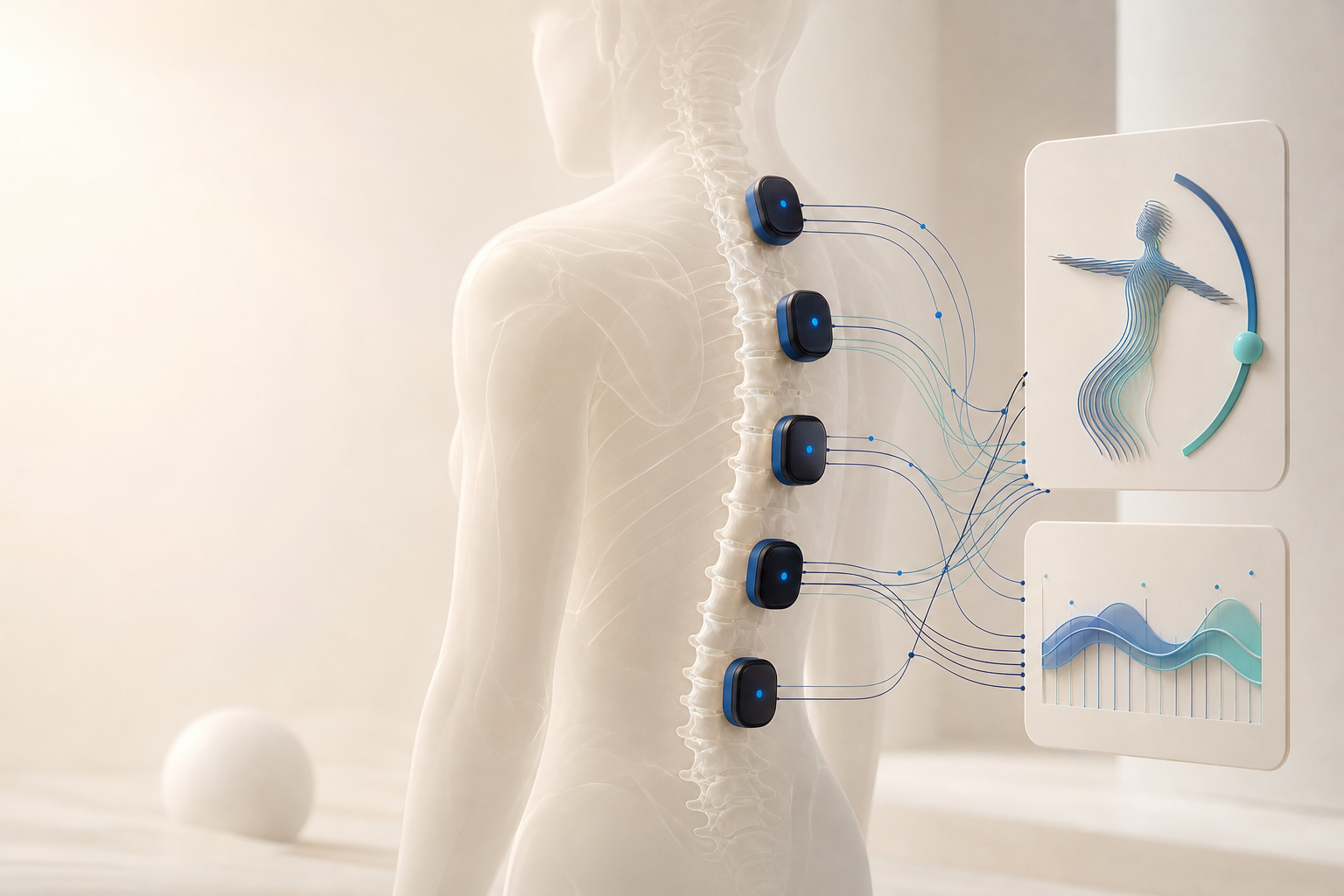
Uspine multi-sensor posture system visual

Perceive the difference. Make the adjustment. Build the control.

Training foundation

Built on SEAS active self-correction.

SEAS—Scientific Exercises Approach to Scoliosis—is the training foundation behind Uspine. It centres on individualized active self-correction, neuromotor control and progressively challenging practice. Uspine brings this training logic into a connected digital experience.

SEAS

Scientific Exercises Approach to Scoliosis

Rather than relying on a position set for the user, SEAS teaches the user to find an individualized correction, stabilize it and carry that control into increasingly challenging movement and daily activity.
PSSE

The wider professional field

Physiotherapeutic Scoliosis-Specific Exercises (PSSE) is the broader category of scoliosis-specific physiotherapy. SEAS is an established approach within this field.

01

Training goal

Learn active control

The user learns to notice a posture deviation, find a correction and keep the corrected posture more steadily during movement and daily activity.

Awareness · Active correction · Stability

02

Practice gap

Knowing the correction is not the same as reproducing it alone

Between professional sessions, perceived posture can differ from actual posture. Feedback is limited, and the quality of home practice is difficult to see.

Perception gap · Delayed feedback · Limited visibility

03

Uspine response

Turn practice into a visible feedback loop

Uspine compares current posture with an individual training reference. Wearable sensing and live guidance help the user adjust and hold, while session records support professional follow-up.

Individual reference · Live guidance · Connected records

Uspine supports posture training, feedback and record keeping. It does not diagnose scoliosis or replace professional assessment, treatment planning or prescribed bracing.

An individual reference

Training begins with a target that belongs to the user.

Calibration and training history help establish a practical posture reference instead of asking every body to perform toward one generic angle.

  1. EstablishCreate a baseline through training setup, professional assessment or saved data.
  2. CompareContinuously relate the current position to the target range during a task.
  3. RefineUse the record to develop the next exercise, challenge or training focus.

A complete session, not a single reading

Follow the path from movement to control.

  1. 01Create a challenge

    Movement, balance or sensory conditions take posture briefly away from its intended reference.

    Weight shiftArm movement
  2. 02Return by feel

    The user first returns to where they believe centre is, revealing how body awareness and the reference compare.

    First-return recordMeasured deviation
  3. 03Adjust and stabilize

    Guidance supports a more precise return, followed by a sustained hold in the target range.

    Directional responseStable hold

Two core modes

Different challenges. The same learning loop.

Return training

Recover a target after movement.

Useful for weight shift, side bending, pelvic changes and other actions that temporarily move the body away from neutral.

Stability control

Stay organised while the task continues.

Useful for standing, sitting, balance and functional movement that challenge trunk control throughout the action.

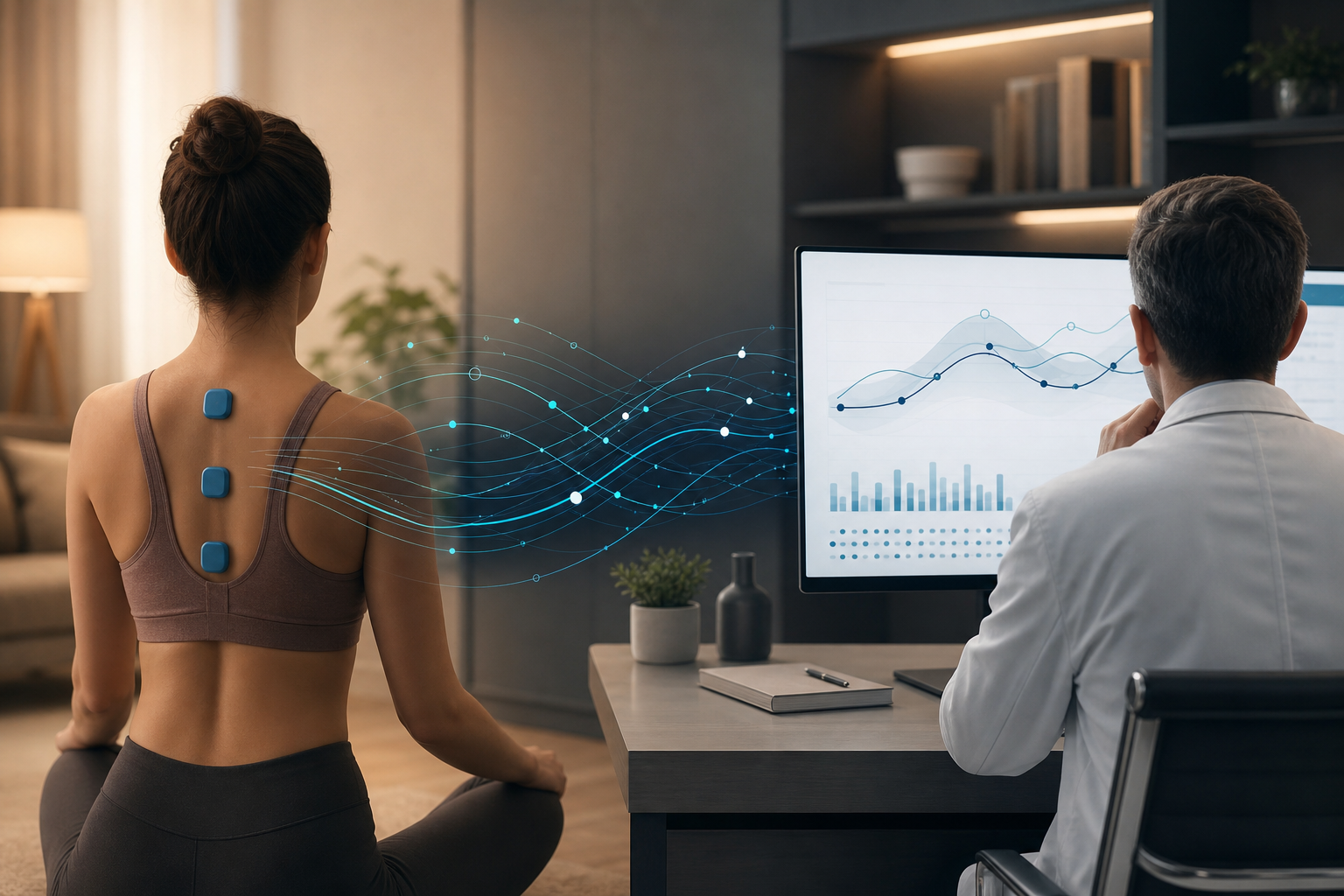
Connected Uspine training and professional review visual

Training that leaves a useful record

Make change easier to see over time.

Uspine preserves the detail that makes a session meaningful: what was trained, how the user returned, how long it took and how steadily the target was held.

  • Completed training content
  • First-return position
  • Time to reach the target
  • Adjustment behaviour
  • Stable hold performance
  • Changes across training cycles

Home and professional use

Choose the depth of sensing and management your setting needs.

CapabilityUspine HomeUspine Pro
Primary settingFrequent guided practice at homeProfessional assessment and program delivery
Sensing configuration3 wearable sensors5 wearable sensors
Reference setupSimplified home calibrationIndividual multi-segment targets
ManagementPersonal history and institution linkMulti-user and program management
Charging setDedicated 3-slot dockDedicated 5-slot dock

See which Uspine configuration fits your training environment.

Request a Demo